
In modern manufacturing, the demand for lightweight, precise, and reliable metal components continues to grow. Traditional casting processes are widely used for mass production, but product development often requires a more flexible solution during the early stages. This is where Differential Pressure Casting becomes an important advanced casting technology.
Differential Pressure Casting is a specialized casting process that uses controlled pressure differences during the filling and solidification stages. Compared with conventional casting methods, this technology helps improve metal flow stability, reduce internal defects, and produce aluminum components with better density and dimensional accuracy.
One of the key advantages of Differential Pressure Casting is its ability to reduce porosity inside cast parts. During traditional casting, trapped gas and uneven material flow may affect the internal quality of components. By applying controlled pressure, this process allows molten aluminum to fill the mold more smoothly, resulting in parts with improved structural integrity and more consistent performance.
Another important benefit is its suitability for prototype development and low-volume production. For many new projects, especially in automotive, industrial equipment, and electronic applications, companies need to validate product designs before investing in full-scale production tooling. Differential Pressure Casting provides a practical option for producing functional aluminum parts with high precision while reducing the initial investment required during the development stage.
Compared with ordinary casting processes, this technology offers advantages such as excellent surface quality, improved mechanical properties, and tighter dimensional control. These characteristics make it suitable for applications where reliability and precision are critical, including motor housings, electronic control housings, automotive components, and industrial parts.
As manufacturing industries continue moving toward lightweight designs and faster product development cycles, advanced casting technologies are becoming increasingly valuable. Differential Pressure Casting creates a bridge between prototype validation and mass production, helping engineers evaluate real components and optimize designs more efficiently.
Although traditional die casting remains an ideal choice for high-volume manufacturing, Differential Pressure Casting provides an additional solution when quality, flexibility, and development efficiency are important considerations. It represents the continuous evolution of aluminum casting technology toward smarter and more efficient manufacturing.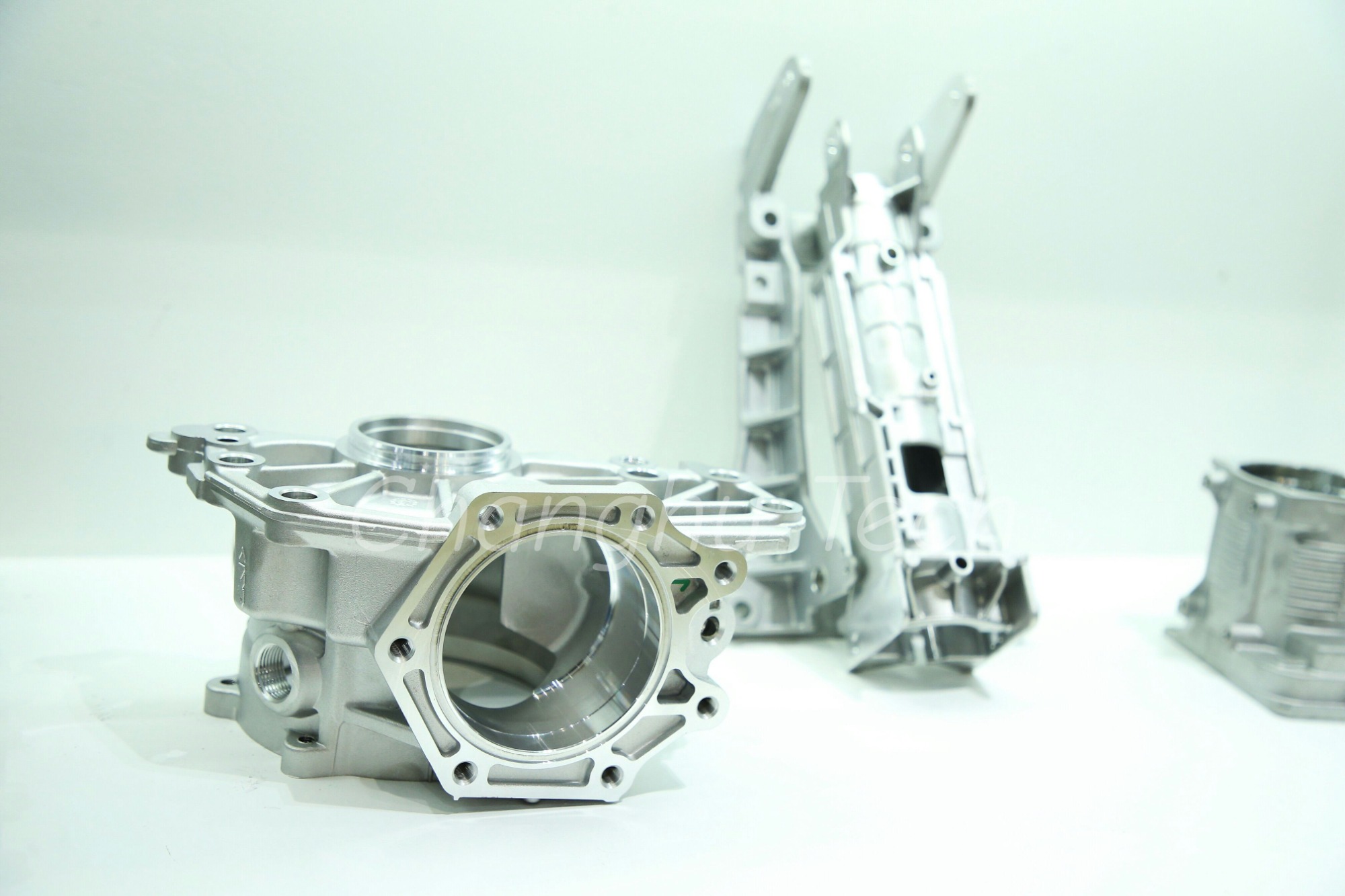
 How Aluminum Die-Cast Enclosures Help Reduce Electromagnetic Interference
 A Guide to Common Aluminum Die Casting Alloys
 Porosity in Aluminum Die Casting: Causes and Effects
 Understanding Dimensional Tolerances in Aluminum Die Casting