
In today's competitive manufacturing environment, precision and efficiency are essential for producing high-quality metal components. Aluminum die casting machining combines the advantages of aluminum die casting with advanced CNC machining processes, delivering parts that meet strict dimensional tolerances and performance requirements across multiple industries.
Aluminum die casting is an efficient manufacturing process capable of producing complex shapes with excellent consistency and repeatability. However, many applications require additional machining to achieve precise dimensions, threaded holes, critical surfaces, and assembly features. This is where CNC machining plays a crucial role.
By integrating precision machining after die casting, manufacturers can create components with tighter tolerances, improved surface finishes, and enhanced functionality. This process is widely used for automotive components, motor housings, telecommunications equipment, industrial machinery, lighting systems, and electronic enclosures.
One of the biggest advantages of aluminum die casting machining is cost efficiency. Die casting creates near-net-shape parts, reducing material waste and minimizing machining time. As a result, manufacturers can achieve high-volume production while maintaining excellent quality and competitive pricing.
Another key benefit is design flexibility. Complex geometries that would be difficult or expensive to machine from solid aluminum can be produced through die casting and then refined through CNC operations. This combination allows engineers to optimize both product performance and manufacturing costs.
Modern CNC machining centers provide exceptional accuracy for drilling, milling, tapping, boring, and surface finishing operations. These processes ensure that every component meets customer specifications and is ready for assembly or final application.
At Changhu Technology, we provide complete aluminum die casting machining solutions, from mold development and die casting production to precision CNC machining and surface treatment. Our experienced engineering team helps customers transform product concepts into reliable, high-quality components for a wide range of industries.
Whether you need complex structural parts, lightweight housings, or precision industrial components, aluminum die casting machining offers the ideal balance of strength, accuracy, and production efficiency.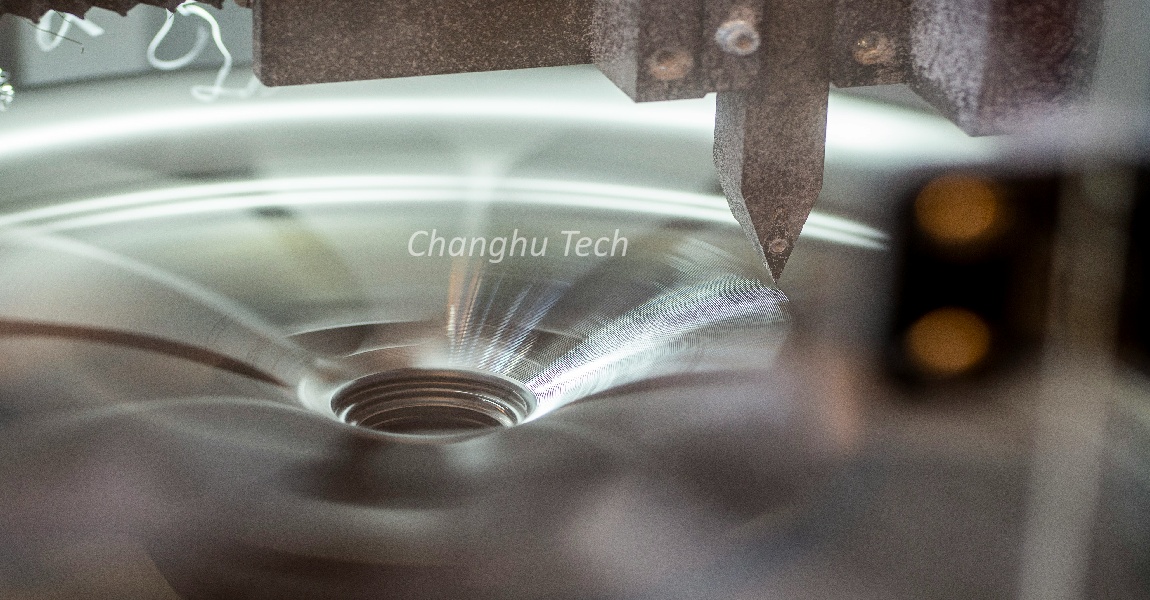
 How Aluminum Die-Cast Enclosures Help Reduce Electromagnetic Interference
 A Guide to Common Aluminum Die Casting Alloys
 Porosity in Aluminum Die Casting: Causes and Effects
 Understanding Dimensional Tolerances in Aluminum Die Casting